
Dental Implants in Peoria, AZ
Losing a tooth affects more than your smile. Dental implants are a permanent, natural-feeling way to replace it and protect the surrounding teeth. Dr. Robert Holyoak and Dr. Lisa Kubik are here to help you understand your options.
What are dental implants?
A dental implant is a small titanium post that replaces a missing tooth root. It is placed in the jawbone, where it fuses with the bone over a few months, and then supports a crown, bridge, or denture on top. Candidacy comes down to a handful of things: how much bone is available where the tooth is missing, how healthy your gums are, your general health and any medications you take, and what you actually want out of treatment. Age by itself is not one of those factors. At Copper Sky Dental, a locally owned practice, not a corporate chain, Dr. Lisa Kubik places implants for patients throughout Peoria, Sun City, and the West Valley, alongside Dr. Robert Holyoak, who has led the practice since 1976. If you are considering implants, call (623) 933-8410 for a straightforward assessment of your options.
Considering a dental implant? Get a straightforward assessment of your options, with clear pricing and no pressure.
Schedule a consultationAlready have an implant treatment plan? Bring it in for an honest, no-obligation review.
Get a free second opinion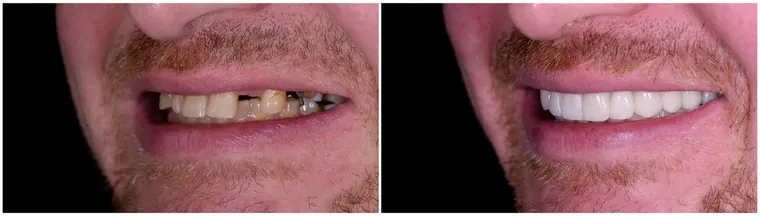
How does a dental implant work?
A dental implant is a small titanium post that is placed into the jawbone where a tooth is missing. Over time, it fuses with the bone through a process called osseointegration and acts as a stable root for a crown, bridge, or denture placed on top of it.
The result is a restoration that doesn't shift, doesn't require adhesive, and doesn't put pressure on neighboring teeth the way a traditional bridge does. With proper care, implants can last decades.
What we actually weigh before recommending an implant
Dental implant treatment is not a single appointment; it is a process that unfolds over several months, and the decision to move forward rests on a specific set of clinical factors, not a general impression of how healthy someone looks. Dr. Kubik places our implants and works through the same short list with every patient:
- Bone volume where the tooth is missing. This is read directly off a digital X-ray, not guessed at. Enough height and width, and an implant can usually go in without extra steps. Bone that has thinned after years without a tooth root often just needs a graft first, not a different plan entirely.
- Whether gum disease is active. Implants placed into inflamed, untreated gum tissue fail at a higher rate. Active periodontal disease gets treated before an implant date is ever set.
- Medications and conditions that affect healing. Uncontrolled diabetes, certain bone-density medications (bisphosphonates), and blood thinners all change the plan, sometimes the timeline, sometimes the technique. They rarely rule out treatment outright.
- What the patient actually wants. A patient who wants the fewest appointments and the lowest cost may be better served by a well-made denture. A patient tired of adhesive and slipping usually is not. Both are legitimate answers.
Dr. Robert Holyoak, who has practiced since 1976, brings decades of pattern recognition to the practice's overall care, watching how implants placed decades ago have held up in his own patients, and Dr. Kubik brings current surgical training. Together, they evaluate each candidate against the list above, not a sales script. If implants are not the right fit for your situation, we will tell you that and walk through alternatives like a bridge or a well-fitted denture.
Who is a candidate for dental implants?
Most healthy adults with missing teeth are candidates, judged against the same short list above rather than a general impression of health. Your consultation covers all of it, including the imaging, before we recommend anything.
Age is not the factor. Here is what actually is.
Many patients in Sun City and Sun City West assume they are too old for implants, and it is one of the more common misconceptions we run into. Age by itself is not on the list above, and we place implants for patients in their 70s and 80s regularly. What moves the needle instead: bone quality on the X-ray, whether diabetes or another condition is well managed, and whether a months-long healing timeline fits what the patient wants to take on.
An honest answer cuts both ways. For some older patients, severe bone loss, a serious health condition, or the demands of a months-long healing process make an implant the wrong choice, and in those cases we say so and walk you through alternatives like a bridge or a well-fitted denture. For many others, especially patients frustrated by dentures that slip, an implant-supported option is very much worth a genuine conversation. The only way to know which applies to you is an individual evaluation, not an assumption based on your age.
What does the research say about dental implant success?
Dental implant treatment is one of the most extensively studied areas in modern dentistry. Here is what two peer-reviewed reviews of the long-term literature actually found, not a rounded-up marketing number.
- A 2019 systematic review and meta-analysis in the Journal of Dentistry, pooling 18 studies, found a 10-year implant survival rate of 96.4% (95% CI 95.2 to 97.5%) (Howe et al., 2019 (opens in new tab)).
- A 2015 systematic review in the International Journal of Oral and Maxillofacial Surgery, covering 7,711 implants across 23 studies followed for a mean of 13.4 years, found a cumulative survival rate of 94.6% (Moraschini et al., 2015 (opens in new tab)).
- Survival is not the same thing as a trouble-free implant. Both reviews note that some "surviving" implants still needed maintenance for bone loss or gum inflammation around them, which is exactly why we schedule follow-up visits rather than treating placement day as the finish line.
"When it comes to placing implants, the patients who do best are the ones who come in for an honest assessment early, before significant bone loss has occurred. The sooner we evaluate, the more options you have."
Dr. Lisa Kubik, DMD
What types of dental implants are there?
We offer four main types of implant treatment, matched to how many teeth are missing and the condition of your jawbone. The right one depends on your goals and a clinical evaluation.
Single Tooth Implant
Replaces one missing tooth with a post and a custom crown. The surrounding teeth are left completely untouched.
Implant-Supported Bridge
When multiple adjacent teeth are missing, implants can anchor a bridge without involving healthy neighboring teeth.
Implant-Supported Dentures
For patients missing most or all of their teeth, implant-supported dentures provide a significantly more stable and comfortable alternative to traditional removable dentures. They stay in place, restore chewing function, and feel far more natural in everyday life.
Full Mouth Restoration
For patients who need comprehensive rebuilding of their bite and smile, we develop a phased treatment plan that addresses the full picture of your oral health, often using permanent dentures, which carry a distinct cost and recovery profile worth understanding before you commit.
What does the dental implant process involve?
Your implant journey starts with a consultation and imaging. We review your bone density, gum health, existing restorations, and any health factors that could affect healing, including medications like blood thinners or bisphosphonates, which require specific protocols. If you're a good candidate, we will schedule implant placement. You'll be numb for the procedure, and most patients describe the experience as far more manageable than they anticipated.
The healing period, typically three to six months, is when osseointegration happens: your jawbone grows around and bonds with the titanium post. After that, we attach the abutment and place your custom crown or restoration. Throughout the process, we're checking in, answering questions, and making sure healing is progressing as expected. We do not consider the treatment complete until you're satisfied with the result.
How much do dental implants cost?
In the Peoria area, a single dental implant with a custom crown typically runs $3,000 to $5,000 all in. The price depends on how many teeth you are replacing, the type of restoration, and whether preparatory work like bone grafting is needed. We provide clear, written pricing after your consultation so you can make an informed decision, with no surprises.
Costs vary by the type of implant treatment:
- Single tooth implant: roughly $3,000 to $5,000 for the post, abutment, and crown together.
- Implant-supported bridge: two or three implants anchor several teeth, so the per-tooth cost is lower than replacing each tooth on its own.
- Implant-supported and full-arch dentures: priced by the number of implants and the restoration. See our permanent dentures page for full-mouth pricing.
We work with most major dental insurance plans, verify your benefits in advance, and can discuss financing so the investment fits your budget. For a deeper breakdown, our blog explains what a dental implant costs in Arizona and how to pay for an implant with insurance and financing.
Free Second Opinions on Implant Treatment
If another dentist has recommended implants and you want a second perspective before moving forward, we offer free second opinions with no pressure and no obligation.
How implant visits are spaced out
Implant treatment runs over months rather than weeks. After the post is placed, osseointegration typically takes three to six months before the final crown goes on, and total treatment time varies from three to nine months depending on your case. You will make several trips rather than one, so it is worth planning for that before you start.
Our office is on the Peoria and Sun City border, and we schedule Monday through Thursday, 7 AM to 3 PM. Call (623) 933-8410 or contact us online and we will map out your timeline before you decide anything.
Office Hours: Monday through Thursday, 7 AM to 3 PM
Address: 9431 W Thunderbird Rd Ste 2, Peoria, AZ 85381
Trusted Resources on Dental Implants
For additional clinical information, the American Dental Association (ADA) (opens in new tab) and the National Institute of Dental and Craniofacial Research (NIDCR) (opens in new tab) publish evidence-based overviews of implant candidacy, procedure, and long-term care.
The survival figures cited above come from two peer-reviewed meta-analyses of the long-term implant literature: Howe, Keys, and Richards, Journal of Dentistry, 2019 (opens in new tab), and Moraschini et al., International Journal of Oral and Maxillofacial Surgery, 2015 (opens in new tab), both indexed on PubMed.
Dental Implants FAQ
Answers to common questions about dental implant treatment in Peoria, AZ
What are dental implants?
A dental implant is a small titanium post placed into the jawbone to replace a missing tooth root. Once it fuses with the bone, a process called osseointegration that typically takes 3 to 6 months, it supports a crown, bridge, or denture on top. The result is a restoration that doesn't shift, doesn't require adhesive, and doesn't stress neighboring teeth. Dr. Kubik at Copper Sky Dental places and restores dental implants, evaluating each patient individually to determine candidacy.
Am I a candidate for dental implants?
Most healthy adults with missing teeth qualify for dental implants. The key factors are adequate bone density in the jaw and good overall oral health. Patients with gum disease or bone loss may need preparatory treatment first. Age is not a disqualifying factor, many of our patients in Sun City and Sun City West get implants in their 70s and 80s. We evaluate bone quality with digital X-rays before recommending any treatment.
How long do dental implants last?
The implant post itself, the titanium piece fused to your jawbone, is designed to last a lifetime with proper oral hygiene. The crown on top wears like a natural tooth does and often needs replacement after a decade or two. Two peer-reviewed reviews of long-term studies, covering thousands of implants followed for 10 years or more, put implant survival at roughly 95 to 96% (see the research section below for the full citations). That said, outcomes depend on bone quality, overall health, and maintenance habits. We will give you an honest picture of what to expect for your specific situation.
Is the dental implant procedure painful?
The procedure is done under local anesthesia, so you won't feel pain during placement. Most patients tell us it was far less uncomfortable than they expected. Post-procedure soreness is typically manageable with over-the-counter medication and usually resolves within a few days. If you have significant dental anxiety, let us know before your appointment and we'll talk through options to make you more comfortable.
How much do dental implants cost in Peoria, AZ?
Implant costs vary depending on the number of teeth being replaced and whether preparatory work like bone grafting is needed. A single implant with a crown typically ranges from $3,000 to $5,000 in the Peoria area. Implant-supported dentures range higher depending on the number of implants and the type of restoration. We provide a full written cost estimate after your consultation, no surprises. We work with most major dental insurance plans and can discuss financing options.
What is the dental implant process?
The process typically involves: 1) Consultation and treatment planning with imaging 2) Implant placement surgery 3) Healing period (3-6 months) while the implant fuses with bone 4) Abutment placement 5) Custom crown fabrication and placement. Total treatment time varies from 3-9 months.
Can implants replace multiple missing teeth?
Yes. Implant-supported bridges can replace several adjacent teeth using only 2 or 3 implants. For patients missing most or all of their teeth, implant-supported dentures use 4-6 implants to support a full arch of teeth, providing a secure alternative to traditional dentures.
Am I too old for dental implants?
Age alone is not a disqualifying factor for dental implants. We evaluate each patient individually, taking into account overall health, bone quality, and personal goals. If you are tired of denture adhesive and dietary restrictions, implant-supported options are worth a conversation.
Where can I get dental implants in Sun City?
Copper Sky Dental provides dental implants for Sun City residents at our Peoria office, located near the Sun City border on Thunderbird Road. As a locally owned practice, Dr. Kubik places single tooth implants, implant-supported bridges, and implant-supported dentures with transparent pricing and free second opinions.
Restore Your Smile with Dental Implants
Schedule a consultation to learn how dental implants can transform your smile and quality of life. Serving Peoria, Sun City, and the West Valley.